

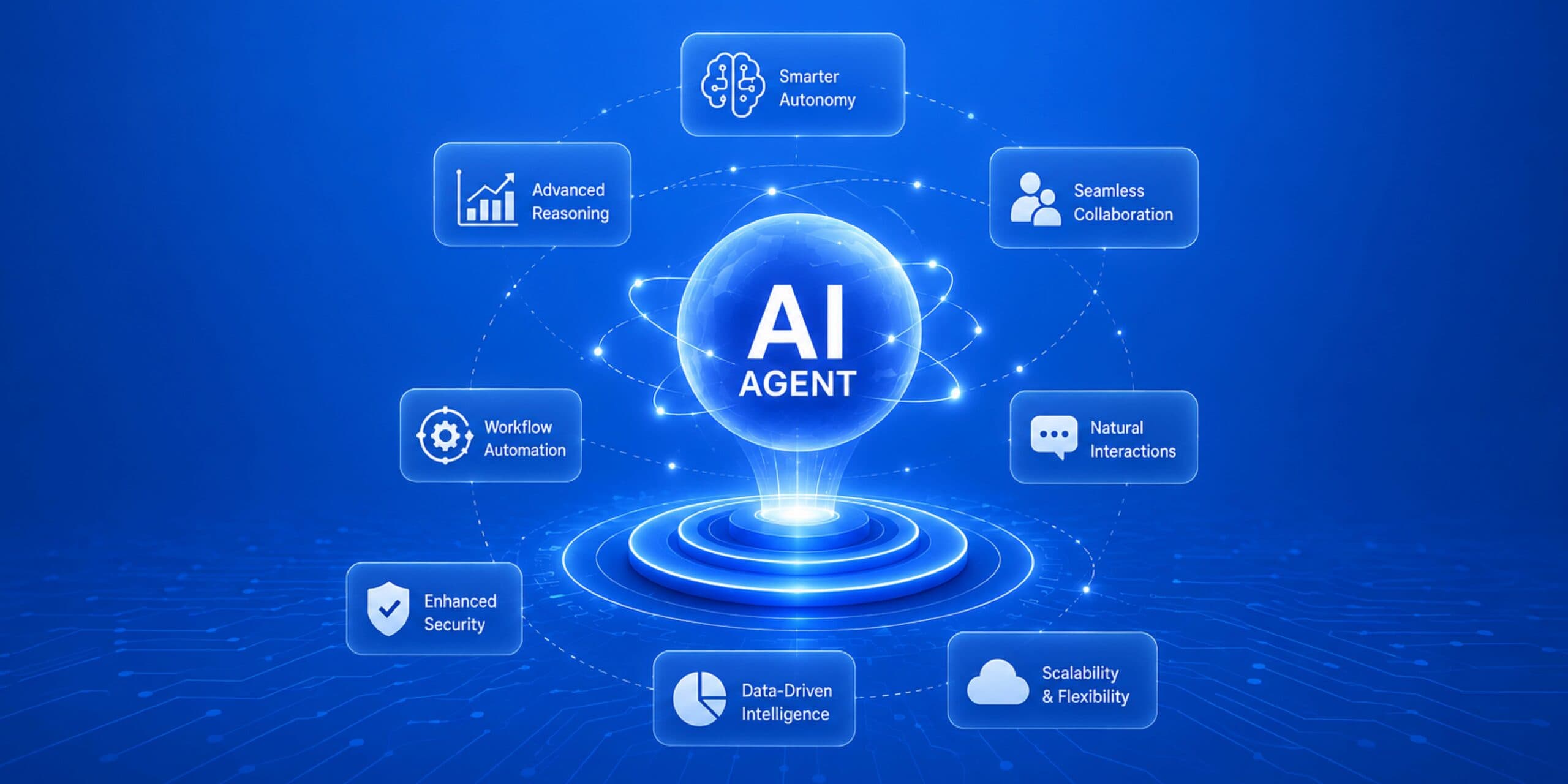
An AI agent for business is artificial-intelligence-based software that can act to help complete business tasks, from answering customer questions, managing leads, and doing follow-up, to helping with operational processes that used to be done largely by hand. Amid business needs that increasingly demand speed, consistency, and efficiency, AI agents are becoming an important technology for business owners and operations managers who want to build a more scalable way of working.
What Is an AI Agent for Business?
Put simply, an AI agent for business is an intelligent system designed to understand context, make decisions based on certain instructions or data, and then carry out actions that support the business process. Unlike ordinary software that only works when given specific commands, an AI agent can understand the goal to be achieved and determine the most relevant steps to complete that task.
In a business context, an AI agent can be used for many operational needs directly related to customers. For example, when a prospective customer sends a message via WhatsApp asking about pricing, the AI agent doesn’t just answer with the product or service price — it can also understand whether the customer is comparing options, needs a recommendation, wants to make a booking, or is already ready to be directed into the purchase process. From there, the AI agent can continue the conversation more contextually and help the business move the customer to the next stage.
This concept matters because many businesses, especially in Indonesia, still rely heavily on digital conversation. Customers ask questions via WhatsApp, Instagram, live chat, or other channels before finally deciding to buy. When all of this is still handled manually, the risk of losing opportunities is high. Chats can be answered late, follow-up can be missed, customer data can be scattered, and the operations team can become overwhelmed when inquiry volume increases.
Why Are AI Agents Increasingly Needed by Businesses?
Businesses today aren’t just required to be present across many channels — they also have to be able to respond to customers quickly and consistently. The problem is, the more channels used, the more complex the operational process behind them becomes. Leads can come from ads, a website, social media, events, referrals, or a marketplace. But if there’s no system to help manage those conversations, a lot of revenue opportunity can be lost after a customer shows interest.
This is where an AI agent becomes relevant. An AI agent helps a business ensure that every customer interaction doesn’t stop as just an incoming chat. Every message can be understood, categorized, followed up, and directed into a clearer process. For business owners, this means sales opportunities can be managed better. For operations managers, this means the team’s workflow becomes tidier, more measurable, and less dependent on the memory or manual speed of each individual admin.
An AI agent also helps businesses reduce the burden of repetitive work. Many customer questions are actually repetitive — things like price, schedule, location, promos, stock, how to order, or order status. When all of these questions are handled manually, the team’s time is consumed by the same work every day. With an AI agent, businesses can automate the repetitive part without losing conversational context, so the human team can focus on more complex, higher-value cases.
The Difference Between an AI Agent and an Ordinary Chatbot
Many people still equate AI agents with chatbots, even though the two have different capabilities. An ordinary chatbot generally works based on a predetermined conversation flow. If a customer selects a certain menu, the chatbot will give an answer according to the scenario that’s already been built. This model is helpful enough for simple questions, but it often feels rigid when a customer asks in freer language or has a need that doesn’t fit the template.
An AI agent works with a more dynamic approach. It doesn’t just read keywords — it also understands the intent behind a customer’s message. If an ordinary chatbot answers based on a menu, an AI agent can understand the conversation’s context, connect the customer’s message with business information, and then determine the next action. This means an AI agent doesn’t just function as an automatic answering tool — it also acts as a system that can help complete a business process.
For example, when a customer writes, “Hi, I want a treatment but my skin is sensitive, which one should I pick?” an ordinary chatbot might just display a list of treatments or ask the customer to choose from a menu. An AI agent can understand that the customer needs a recommendation, feels unsure, and needs guidance before booking. With the right context, the AI agent can respond more naturally, ask about additional needs, provide an initial recommendation, and then direct the customer to a consultation or booking schedule.
Another difference lies in the ability to carry out actions. An ordinary chatbot usually stops at the conversation, while an AI agent can be directed to carry out follow-up actions. An AI agent can collect lead data, record customer needs, send follow-up, hand over to a human agent, or help direct the customer into the transaction process. This is what makes an AI agent more relevant for businesses that want to build an operational system, not just reply to messages automatically.
How an AI Agent for Business Works
How an AI agent works starts with understanding the message coming in from a customer. When a customer sends a message via WhatsApp, Instagram, live chat, or another channel, the AI agent reads the content of that message and identifies the intent or main purpose behind it. This intent could be a product question, a price request, a complaint, a need for consultation, a booking request, or a signal that the customer is ready to make a purchase.
After understanding the intent, the AI agent matches the customer’s message against the business knowledge that’s already been provided. This knowledge could be product information, a service catalog, FAQs, customer service SOPs, promo rules, CRM data, or the sales flow used by the company. That’s why an effective AI agent isn’t just a generic AI, but an AI configured according to the business’s specific needs and character. The clearer the business data and rules provided, the more relevant the responses and actions the AI agent can carry out.
The next stage is decision-making. The AI agent determines the most appropriate response or action based on the customer’s context. If the customer only needs simple information, the AI agent can give a direct answer. If the customer shows buying interest, the AI agent can direct them to the order process. If the customer hasn’t provided enough data, the AI agent can ask for additional information. If the conversation needs human handling, the AI agent can forward the chat to the relevant team with the context already summarized.
After that, the AI agent can carry out the required task. In business, this task could be sending an answer, recording customer data, sending a reminder, creating a follow-up, directing to a booking, or helping with the customer service process. When the AI agent is connected to a CRM and an omnichannel system, every conversation doesn’t just become a chat that passes by — it becomes data that can be monitored, analyzed, and used to improve the business process.
Examples of AI Agent Implementation in Indonesian Businesses
In a beauty clinic business, an AI agent can help answer customer questions about treatments, prices, doctor schedules, promos, and service recommendations. Many prospective clinic customers don’t book right away — they ask questions first to make sure a particular treatment suits their skin condition. An AI agent can help provide initial information, understand the customer’s needs, direct them to a consultation, and help with the booking process. After a treatment is complete, the AI agent can also be used for after-treatment follow-up, reminding customers of check-up schedules, or offering relevant follow-up care products.
In a retail and e-commerce business, an AI agent can help answer questions about stock, size, color, promos, shipping costs, how to order, and order status. In Indonesia, many customers still want to ask via chat before buying, even when the brand already has a website or marketplace listing. If the response takes too long, customers can switch to a competitor. With an AI agent, businesses can maintain purchase momentum because customers get a fast response and are directed to the next step more consistently.
In an education business, an AI agent can help answer questions about programs, class schedules, fees, learning methods, and the registration process. Prospective students or parents coming from digital ads usually need a quick explanation before they’re interested in a consultation. An AI agent can help filter their needs, recommend a suitable program, and schedule a discussion with the admissions team.
In a B2B business, an AI agent can help with the lead qualification process. Not every incoming lead has the same level of readiness. Some are just looking for information, some are comparing vendors, some already have a clear need, and some are ready to meet with the sales team. An AI agent can help gather important information such as industry, business size, main needs, operational challenges, purchase timeline, and potential budget. That way, the sales team receives leads with clearer context and doesn’t have to start the conversation from zero.
Benefits of AI Agents for Business Owners and Operations Managers
For business owners, the main benefit of an AI agent is helping protect revenue opportunities from being lost due to a slow or inconsistent process. When a customer has already shown interest, the business needs to respond quickly. An AI agent helps ensure incoming chats stay handled, even outside working hours or when the team is busy. With faster responses and more organized follow-up, the chance of a customer moving on to the purchase stage becomes greater.
For operations managers, an AI agent helps create a more efficient way of working. Many operational problems arise not because the team isn’t working, but because the system is too manual. Admins have to remember follow-ups, check chats one by one, record customer data separately, and make sure no leads are missed. With an AI agent, part of that process can be automated and made easier to monitor.
An AI agent also helps improve visibility into customer data. When conversations are scattered across many channels, businesses often struggle to see each customer’s status — who just asked a question, who’s already interested, who needs to be followed up, who has already purchased, and who is likely to place a repeat order. If the AI agent is connected to a CRM, that data can be managed more neatly, so business decisions are based not just on feeling, but on more structured information.
An AI Agent Doesn’t Replace Humans — It Strengthens the Work System
One common misunderstanding about AI agents is the assumption that this technology will replace the entire human role. In healthy business practice, an AI agent actually functions as a reinforcement of the human work system. The AI agent handles repetitive, administrative, flow-based tasks, while the human team still plays a role in conversations that require empathy, negotiation, strategic judgment, or special decisions.
This division of roles makes a business more efficient without losing the human touch. The customer service team no longer has to answer the same basic questions over and over. The sales team no longer has to spend too much time on unstructured leads. The operations team is no longer entirely dependent on manual record-keeping. With the help of an AI agent, humans can focus on work that truly requires judgment and relationships.
Cekat.ai as a Reference AI Agent for Businesses in Indonesia
Cekat.ai exists as a platform that helps businesses manage customer engagement, AI agent, CRM, omnichannel communication, and automation within a single ecosystem. This approach matters because an AI agent shouldn’t stand alone as just an automatic chat-reply feature. To truly impact the business, an AI agent needs to be connected to customer conversations, CRM data, follow-up workflows, and the broader operational process.
With Cekat.ai, businesses can build an AI agent designed for real needs in the Indonesian market, especially businesses that interact a lot with customers via WhatsApp, Instagram, live chat, and other digital channels. Cekat.ai helps businesses capture customer intent, respond to chats faster, manage customer data, run follow-up more consistently, and turn conversations into a more measurable business process.
For businesses that are starting to feel overwhelmed by chat volume, losing leads due to slow responses, or struggling to measure the effectiveness of customer interaction, Cekat.ai can be the foundation for building a more modern customer engagement system. The AI agent within an ecosystem like Cekat.ai doesn’t just help answer questions — it also helps businesses manage the customer journey from the start of the conversation through to the revenue opportunity.
Conclusion
An AI agent for business is intelligent software that can understand context and make decisions to help complete business tasks. Unlike an ordinary chatbot, which generally just follows a certain conversation flow, an AI agent is able to carry out a more contextual process and help a business move from simply replying to chats toward managing the customer journey more systematically.
How an AI agent works starts with understanding the customer’s message, reading the intent, matching it against business knowledge, determining the best action, and then carrying out the required process. In the context of Indonesian business, an AI agent is highly relevant because a lot of sales, service, and follow-up processes still happen through chat. When this process is managed manually, revenue opportunities are easily lost. With an AI agent, businesses can respond faster, work more efficiently, and keep every customer interaction moving in a more productive direction.
For business owners and operations managers, an AI agent is no longer just an add-on technology, but part of the work infrastructure that can help a business grow in a tidier, more scalable way. If your business wants to start using an AI agent to improve customer response, tidy up follow-up, and turn conversations into more measurable revenue opportunities, you can start with Cekat.ai.
Try Cekat.ai for free and see how an AI agent can help your business work faster, more consistently, and become more ready to turn every customer interaction into business growth.
FAQ
What is an AI agent for business?
An AI agent for business is artificial-intelligence-based software that can understand context, make decisions, and carry out business tasks in an automated way. An AI agent can help answer customer questions, manage leads, do follow-up, record customer data, and even direct conversations to the right team.
What’s the difference between an AI agent and an ordinary chatbot?
The difference between an AI agent and an ordinary chatbot lies in the ability to understand context and carry out actions. An ordinary chatbot usually works based on a menu flow or template answers, while an AI agent can understand the customer’s intent, adjust its response based on business data, and carry out follow-up tasks such as follow-up, lead qualification, booking, or handover to a human agent.
How does an AI agent work?
How an AI agent works starts with reading the customer’s message, understanding the intent, matching it against business knowledge, and then determining the most relevant response or action. After that, the AI agent can carry out tasks such as answering questions, recording data, sending reminders, directing to the order process, or forwarding the conversation to a human team if needed.
Is an AI agent suitable for small businesses?
An AI agent is suitable for use by small businesses, especially if that business receives a lot of customer questions via WhatsApp, Instagram, a website, or other digital channels. With an AI agent, small businesses can respond to customers faster and keep the follow-up process consistent without having to immediately add a lot of team members.
Does an AI agent replace customer service?
An AI agent doesn’t have to replace customer service. It’s more accurately understood as a tool that helps customer service work more efficiently. Repetitive and administrative tasks can be handled by the AI agent, while the human team stays focused on more complex, personal conversations or ones that require special decisions.
What are examples of AI agent use in Indonesian businesses?
Examples of AI agent use in Indonesian businesses can be found in beauty clinics, e-commerce, retail, education, and B2B. An AI agent can help answer customer questions, provide recommendations, handle bookings, manage leads from ads, send follow-up, and help the sales team get clearer customer context before closing.
Why do businesses need to use an AI agent?
Businesses need to use an AI agent because customers today expect fast, consistent responses. If the process is still manual, chats can be answered late, leads can be missed, and customer data can be scattered across many channels. An AI agent helps businesses reduce that process leakage by making customer handling more automatic, tidy, and measurable.
How do you start using an AI agent for business?
The way to start using an AI agent is to identify the process that most often consumes time or causes lost opportunities, such as answering repetitive questions, following up on leads, booking, customer support, or recording customer data. After that, businesses can use a platform like Cekat.ai to build an AI agent connected to communication channels, CRM, and workflow automation.
Read next: AI Agent Glossary for Business: 30 Terms You Need to Know