WhatsApp Service vs Marketing Pricing: Understanding the Four Conversation Categories

Cekat AI

A business checks last month’s WhatsApp Business API bill. The total is surprising: Rp 45 million. After breakdown, it turns out 85% of the cost comes from marketing conversations, while service conversations (which have higher volume) are only 15% of the total cost.
This is not an anomaly. This is Meta’s pricing structure by design: conversations started by customers (service) are far cheaper than conversations started by the business (marketing, utility, authentication). Businesses that understand this mechanism can shift volume from expensive to cheap categories, saving 30-60% on monthly WhatsApp API costs.
This guide covers Meta’s four conversation categories, why they are priced differently, when each category applies, and how to structure workflows that shift volume toward cheaper categories.
Key Advantages
- Reduce monthly WhatsApp API costs: Understanding pricing structure is the most direct way to lower bills without reducing communication volume.
- Correct template categorization: Templates categorized correctly (utility instead of marketing) save significantly.
- Campaign optimization for service sessions: Broadcasts that trigger customer replies open free service windows for follow-up.
- More accurate campaign cost prediction: Knowing the rate per category enables budget planning that does not miss.
Meta’s Four Conversation Categories

Since 2023, Meta uses a session-based billing model: businesses are charged per conversation (24 hours), not per message. Every conversation falls into one of four categories:
Marketing. Conversations the business starts for promotional purposes: new product ads, discount campaigns, cross-sell, upsell, welcome message for new leads. Highest rate.
Utility. Conversations the business starts for transactional communication: order confirmations, shipping notifications, appointment reminders, account status updates, invoices. Middle rate.
Authentication. Conversations the business starts for identity verification: OTP, 2FA verification, login confirmation. Lowest rate among business-initiated categories.
Service. Conversations started by the customer (customer messages first). Meta made them free for the first 1,000 conversations per month per number. After that, the rate is much lower than other categories. [Medium confidence: Meta adjusts the free quota and rates periodically; verify specific figures against Meta pricing documentation.]
Why Meta Prices It This Way
Meta’s pricing structure is not arbitrary. It reflects the spam risk of each category.
Marketing has the highest spam risk. Unwanted promotional messages are the worst WhatsApp experience. Meta raises its rate to provide an economic disincentive against excessive marketing volume.
Utility has moderate risk. Order confirmations are important to customers, but if sent excessively (like 5 updates per order) they still annoy. The middle rate reflects clear value to customers alongside moderate abuse potential.
Authentication has very low risk. Customers actively request OTP by starting a login or transaction process. Meta agrees that this is a direct customer need and sets a low rate.
Service has no spam risk. Because the customer starts the conversation, there is no risk of unwanted message delivery. Meta rewards businesses whose communication is customer-driven with the lowest rate.
When Each Category Applies
The category is determined when the conversation starts, not when the template is submitted. Some concrete examples:
- You send a discount promo broadcast to 10,000 contacts who have not chatted in the last 24 hours: 10,000 marketing conversations.
- You send an automated order confirmation template to a customer who just checked out: 1 utility conversation per customer.
- Your system sends an OTP to a customer who initiated login: 1 authentication conversation.
- A customer chats “Hi, want to ask about pricing” to your business number: 1 service conversation (started by customer).
- A customer replies to your marketing broadcast: the conversation already paid for as marketing stays open for 24 hours, no additional cost for your replies.
For a deeper understanding of 24-hour window mechanics and their impact on cost, see Understanding the WhatsApp 24-Hour Window.
Common Template Categorization Mistakes
The most expensive mistake is categorizing utility templates as marketing. The difference can reach 4-5x the cost per conversation.
Examples of miscategorization:
- Order confirmation with an added “Check our new products at this link” is categorized as marketing. If it were just confirmation without added promo, it would be utility.
- Appointment reminder with added “Don’t forget to check this month’s promo” is categorized as marketing. Without the promo, it would be utility.
- Shipping update with a CTA “Buy again at this link” is categorized as marketing. Without the CTA, it would be utility.
Meta’s rule: if a template contains promotional content (link to products, discount code, buy call-to-action), it must be categorized as marketing even if the main context is transactional. The solution is to separate messages: one utility template for transactional updates, one separate marketing template for promo.
How to Structure an Efficient Workflow
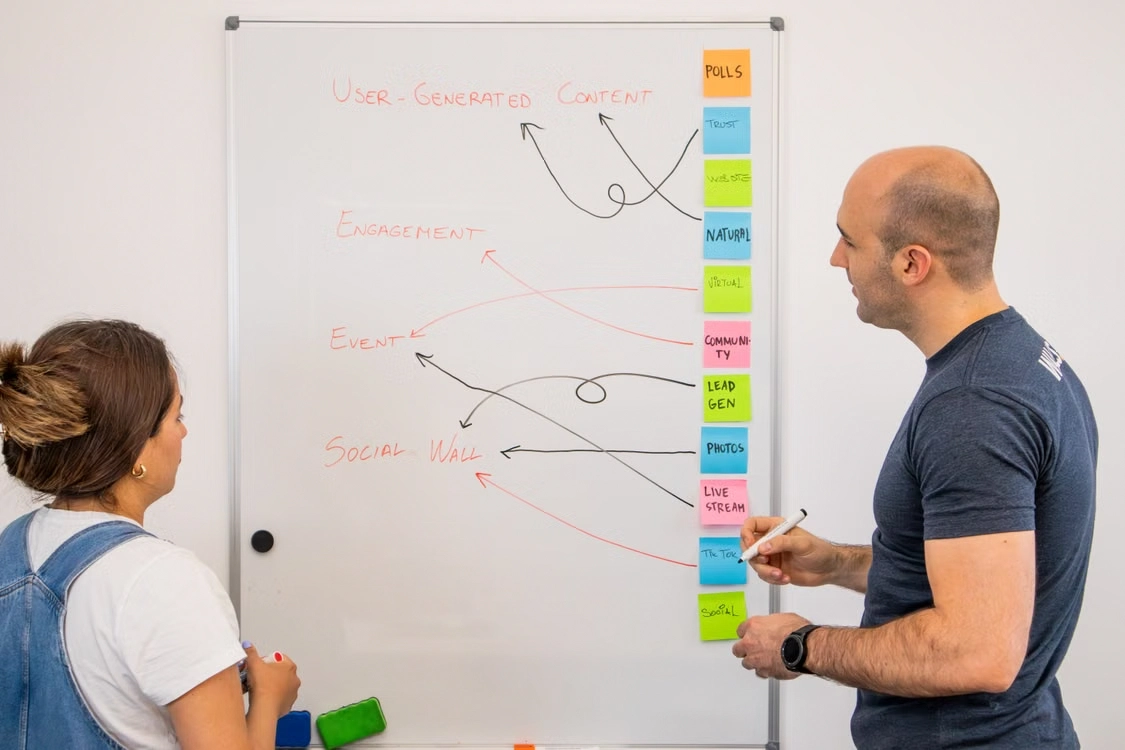
Three most effective strategies to shift volume to cheaper categories.
Strategy 1: Prioritize user-initiated channels. Every time the business can trigger a customer to start a chat (via click-to-WhatsApp ads, WhatsApp button on website, DM ads), the conversation becomes service (cheap or free) instead of business-initiated (expensive).
Strategy 2: Separate transactional templates from promotional templates. Do not mix order updates with promo. One utility template for transactions, one separate marketing template for promo. This lowers the rate for transactional updates.
Strategy 3: Take advantage of the 24-hour window. When a customer replies to a marketing broadcast, the service window opens for 24 hours. Use this time for free follow-up instead of sending a new marketing template.
For campaign strategies that optimize active session patterns and conversation rates, see WhatsApp Marketing Campaign Guide.
Where the Tool Stack Fits
Applying categorization and window optimization strategies manually is hard for teams with high volume. A good BSP dashboard displays cost breakdown per category, allows segmentation by window status, and automatically selects the cheapest message format for a given situation.
Platforms like Cekat display real-time cost breakdown per category and provide automation to route communication to the cheapest category that still meets the business objective.
For broadcast capabilities that manage categories and segmentation in an integrated way, see the WhatsApp Broadcast page.
Where to Start
Take last month’s WhatsApp Business API bill. Break it down by category: what percentage is marketing, utility, authentication, service. If marketing is more than 50%, there is significant optimization opportunity.
Audit active templates: how many are categorized as marketing when they should be utility? Reclassifying to the correct category usually lowers the bill 20-30% without changing operations.
Finally, look at acquisition patterns: what percentage of customers come through channels that trigger user-initiated conversations (service) versus those that must be contacted through templates? Shifting some acquisition to user-initiated channels has a lasting effect on cost.
Cut Your Monthly WhatsApp API Costs
Every month without a conversation category audit is a month you likely pay marketing rates for messages that should be utility, or miss free service opportunities. The difference for businesses with 10,000+ conversations per month can reach tens of millions of rupiah.
If you want to shift volume to cheaper conversation categories without reducing communication output, WhatsApp Blast from Cekat provides automatic segmentation and category optimization for your business broadcasts.
Start a free trial to see the cost breakdown per category and a savings simulation.
Or chat with our team for a review of last month’s WhatsApp API bill and an estimate of the savings possible.


