
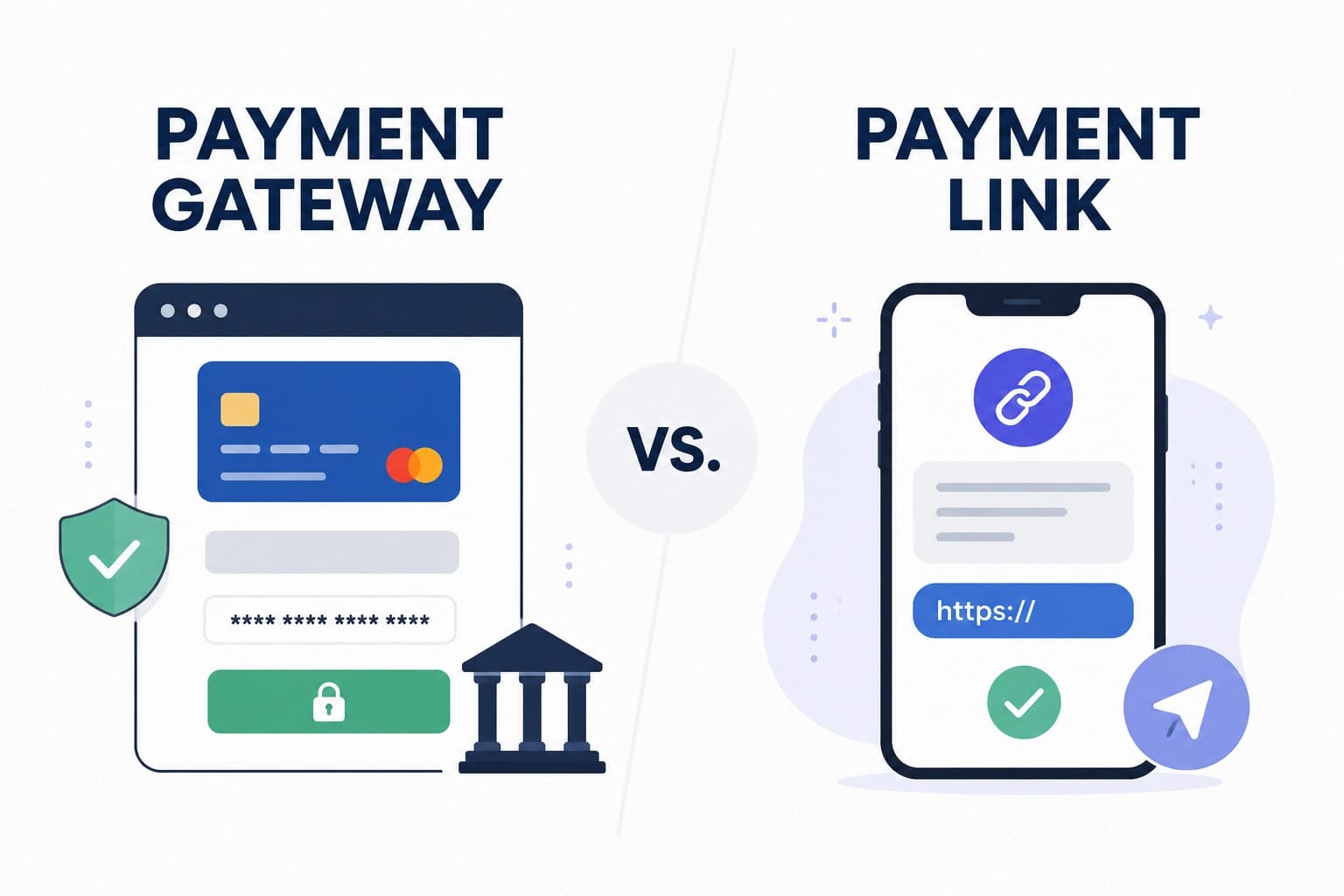
If you have ever heard the terms payment gateway and payment link used interchangeably and felt confused about which one to choose, you are not alone. Many business owners simply want transactions to process rapidly and funds to settle smoothly. However, these two mechanisms deliver distinctly different checkout workflows and buyer experiences.
This guide will help you determine when to deploy an integrated payment gateway for native website or mobile app checkouts, and when a dynamic payment link is more suitable for instant chat invoicing and direct billing.
If you want to structure your enterprise payment workflows smoothly from day one, you can consult with the team at Cekat.ai.
Definitions: Payment Gateway vs. Payment Link
- Payment Gateway (Integrated Checkout Infrastructure): The technical system connecting your online storefront (website or custom app) directly with financial processing networks. A gateway operates natively within your checkout pages to encrypt transactional data, execute real-time banking authorizations, and return definitive order status updates instantaneously.
- Payment Link (Instant Hosted Invoicing URL): A unique, shareable URL generated for a specific transaction amount. This link redirects buyers to a secure, hosted payment page managed by the payment service provider. Merchants simply distribute this link via WhatsApp, email, or social media messaging so customers can choose their preferred payment method and complete the purchase.
In simple terms, a payment gateway acts as an automated, integrated checkout terminal within your digital store, whereas a payment link functions as a dedicated digital invoice sent directly to individual buyers.
Customer Journey & Operational Workflows Compared
Understanding the distinction between a payment gateway and a payment link is easiest when examining the end-to-end customer purchase journey:
- Payment Gateway Flow for Website Checkouts: The buyer browses product catalogs, adds items to their digital shopping cart, and enters the integrated website checkout page. Transaction details encrypt and route to the payment processor. Once authorized by the issuing bank, order statuses synchronize and update within the merchant’s store backend in real time.
- Payment Link Flow for Direct Chat Billing: The merchant generates a transaction link configured with a specific invoice amount and shares it with the customer inside a messaging thread. The customer clicks the link, lands on a secure external payment interface, and selects their preferred payment instrument. Upon settlement, automated webhook notifications confirm the payment to both buyer and seller.
Decision Framework: Choosing the Right Solution for Your Business
Analyzing your commercial workflows will help you determine which payment option maximizes operational efficiency:
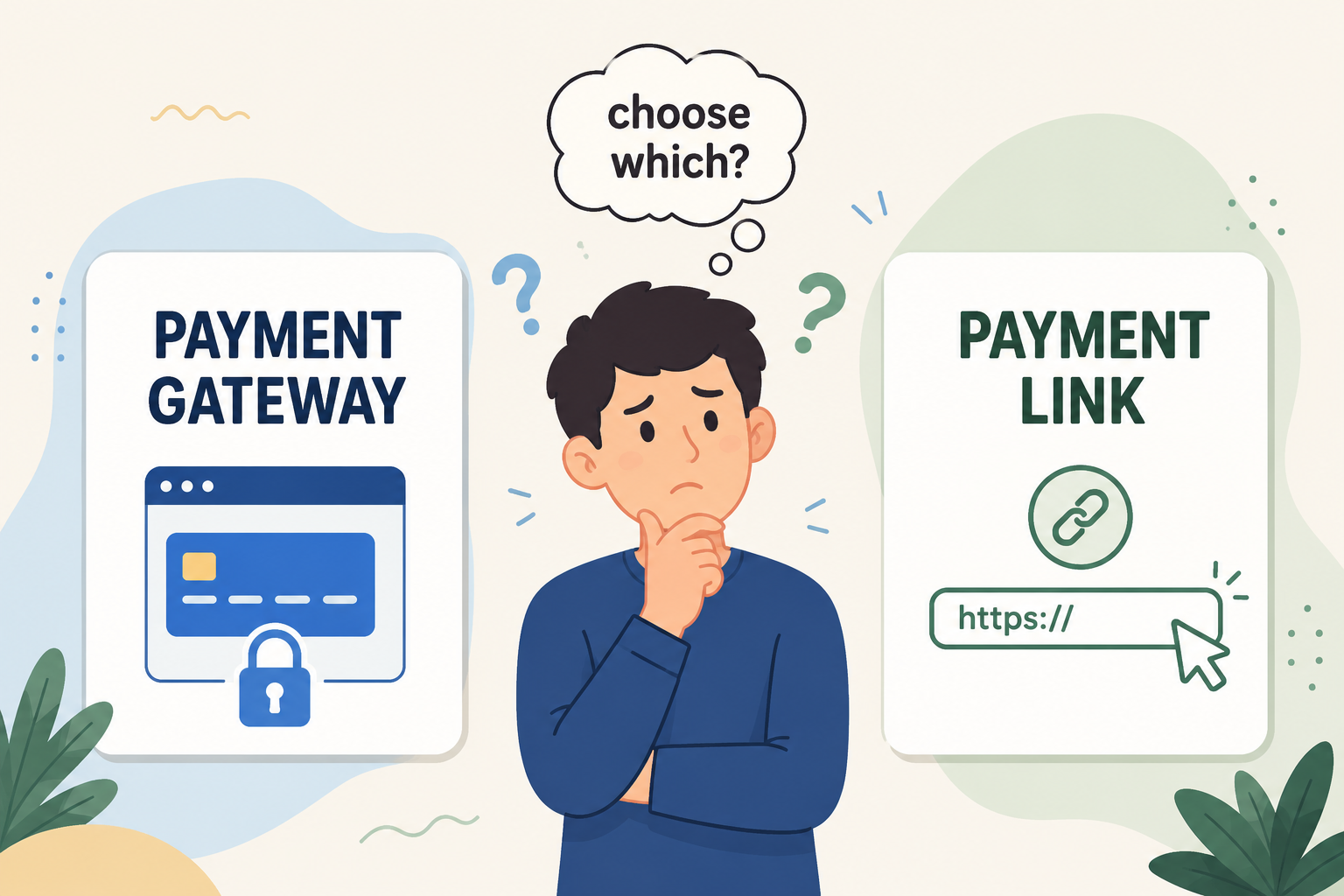
- Choose a Payment Gateway If: You operate an e-commerce platform or custom application with high daily transaction volumes and standardized product catalogs. A gateway automates order processing, simplifies refund management, and maintains structured accounting reconciliation at scale.
- Choose a Payment Link If: You manage a service-based business (such as creative design or consulting), sell bespoke/custom-order goods, close sales inside messaging apps, or require down payment (deposit) invoicing without the overhead of building a complex web storefront.
- The Hybrid Approach: Many scaling mid-market enterprises combine both tools. The payment gateway powers the primary website checkout flow, while sales representatives leverage payment links to bill custom quotations or negotiate deals outside standard storefronts.
Common Misconceptions to Avoid
- Assuming Both Tools Are Identical: Forcing manual links onto high-volume e-commerce catalogs complicates automated inventory reconciliation, while building custom gateway integrations for simple 1-on-1 client consulting is unnecessary overkill.
- Assuming Payment Links Are Less Secure: Both mechanisms utilize identical enterprise-grade PCI-DSS data encryption protocols. The difference lies in where the user interface renders, not in the underlying security standards.
- Overlooking Operational Features for Lower Fees: Selecting a payment vendor purely for marginal basis-point fee savings often means sacrificing automated webhooks, robust reporting dashboards, and responsive customer support.
Deciding between a payment gateway and a payment link ultimately depends on your customer engagement touchpoints and internal operational workflows. If you need automated, centralized transactions directly inside your website, a payment gateway is the proper choice. However, if you require flexible, rapid invoicing without technical deployment friction, a payment link delivers immediate value.
If you need assistance designing an automated conversational checkout flow and financial reconciliation system for your business, the team at Cekat.ai is ready to help structure the ideal strategy.


