
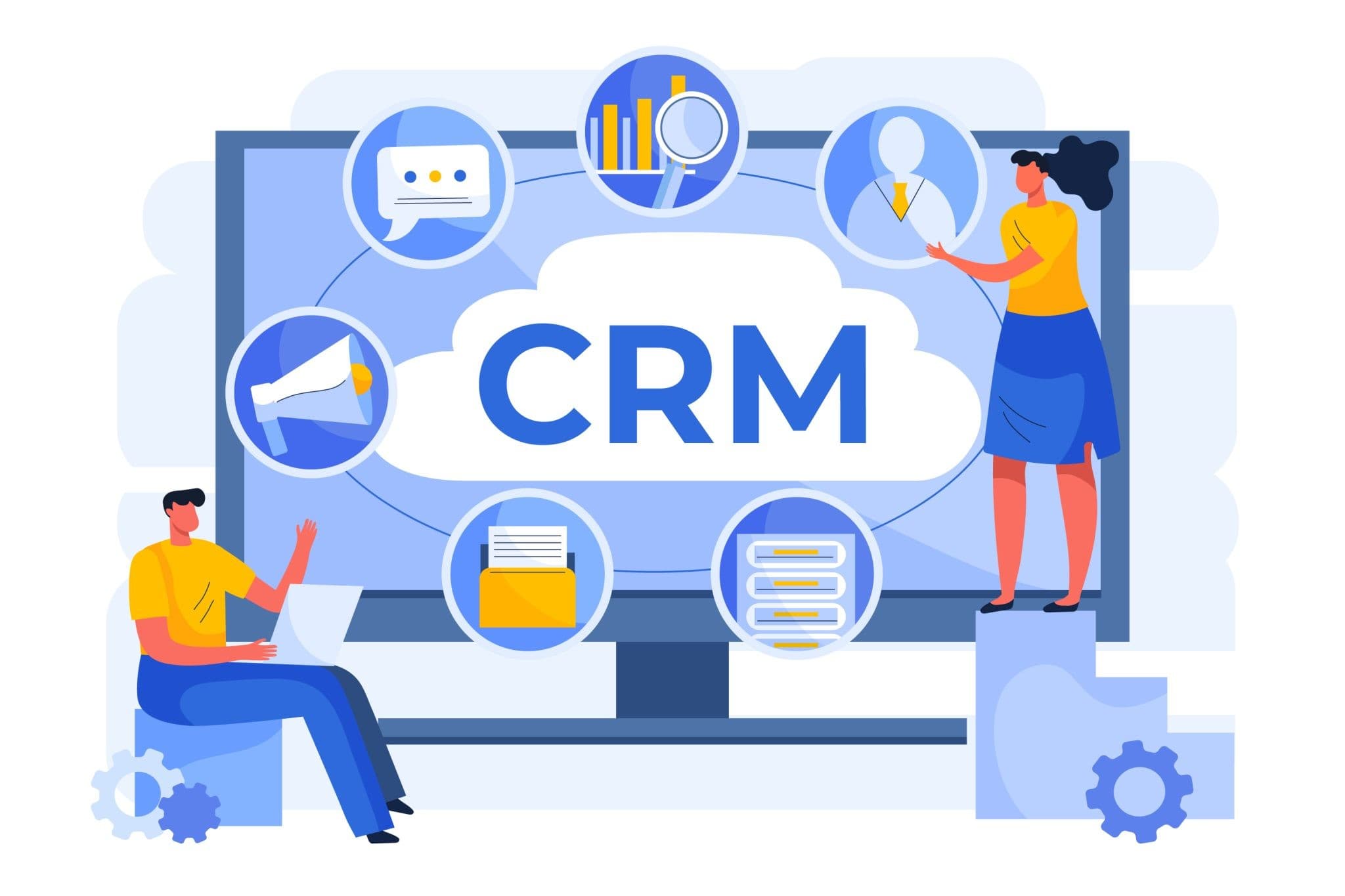
A Data Architecture That Unifies Conversations and Customer Context
Many businesses assume that connecting WhatsApp API to a CRM is simply a matter of “piping incoming chats into a CRM dashboard.” This assumption is wrong, and it’s often the root cause of failed implementations. A shallow integration actually creates fragmented data, lost customer context, and a customer service team that keeps working reactively.
A proper WhatsApp API–CRM integration is about two-way data synchronization, not just message forwarding. This article breaks down the relevant integration architecture, common risks that are often overlooked, and technical approaches aligned with the official best practices of the WhatsApp platform under the Meta Platforms ecosystem.
Why WhatsApp API–CRM Integration Can’t Be Simple
A naive approach usually starts from three problematic assumptions:
-
Chat = customer data
In reality, a chat is just an event. Business value emerges when a chat is mapped to a customer profile, transaction history, and lifecycle stage. -
The CRM is always ready to receive real-time data
Not every CRM is designed for high-frequency events like WhatsApp conversations. -
One-way sync is enough
Without two-way synchronization, the CRM becomes just a passive archive, not a decision-making system.
A mature approach treats WhatsApp API as an event source, and the CRM as the single source of truth.
Basic Architecture for WhatsApp API–CRM Integration
1. Event & Message Handling Layer
WhatsApp API generates various events: inbound messages, delivery status, read receipts, and conversation category. All of these events come through the webhook.
Key principle:
A webhook isn’t just a technical endpoint — it’s a data validation gateway. Without filtering and normalization, the CRM will be “flooded with noise.”
Examples of events that need to be sorted:
-
Message intent (question, complaint, follow-up)
-
Conversation window (24-hour window vs. template-based)
-
Interaction status (open, pending, resolved)
2. CRM Webhook & Customer Data Sync
This is where the LSI keywords crm webhook and customer data sync become truly technically relevant.
Healthy synchronization includes:
-
Identity resolution: linking the WhatsApp number to the CRM customer ID
-
Context enrichment: adding metadata (product, order ID, SLA)
-
Bidirectional update: CRM status affects the WhatsApp flow, and vice versa
A common mistake is saving every message as a “new ticket,” which actually damages the continuity of the customer relationship history.
3. Data Model: Chat, Not Ticket
A CRM forced to treat chat as a static ticket will quickly break down at scale. A more accurate approach:
-
Conversation as a stream
-
Ticket as a context aggregation
-
Customer as the primary entity
With this model, one customer can have many conversations without losing continuity.
Proper Data Synchronization: What Should Be Synced?
Data That Must Be Synced:
-
Customer identity (phone, CRM ID)
-
Conversation status (open/closed/escalated)
-
Intent & sentiment (if using AI)
-
SLA timer & agent assignment
Data That Shouldn’t Be Synced Directly:
-
All raw chat content without context
-
Heavy media without metadata
-
Non-critical delivery events
This selective approach keeps the CRM fast, accurate, and relevant.
The Role of AI in WhatsApp API–CRM Integration
AI is often positioned as just a “chatbot.” This is a dangerous oversimplification.
In the context of CRM integration, AI should:
-
Classify intent before data enters the CRM
-
Determine whether a conversation deserves to become a ticket
-
Trigger escalation rules based on context, not just keywords
Without contextual AI integration, a CRM becomes just a data warehouse, not a decision-making system.
Integration Risks That Are Rarely Discussed
As a counterbalance to the optimistic narrative, there are some real risks:
-
Data duplication caused by weak identity mapping
-
Latency escalation when the CRM isn’t ready for real-time data
-
Compliance drift if templates & consent aren’t managed centrally
Businesses that ignore these risks usually only realize there’s a problem once chat volume has already become unmanageable.
Integrating WhatsApp API with a CRM isn’t just a technical project — it’s the design of a customer data system. Business value emerges when conversation, context, and decisions come together in one synchronized architecture. Without that, WhatsApp API is just an extra communication channel, not a growth lever.
An Integrated Solution from Cekat.AI
Cekat.AI helps businesses build a WhatsApp API–CRM integration that isn’t just “connected,” but aligned in data, context, and operations. With a hybrid AI and rule-based sync approach, Cekat.AI ensures every WhatsApp conversation enriches your CRM — instead of burdening it. If you want a CRM that truly understands your customers, not just logs chats, Cekat.AI is the right foundation.


